To Tami
by darlene anita scottIn this letter, Shenandoah contributor darlene anita scott writes to Tami, a childhood friend and a character in her poem “Watershed.” darlene uncovers the history of misogynoir in the United States and the legacy of anti-Black sexism that, to this day, shapes Black girlhood—including the shared childhood of herself and Tami. Among memories from their youth, darlene speaks to remembrance, mythmaking, and what might have been. “Watershed” was featured in Issue 74.1-2 and was the co-winner of the Graybeal-Gowen Prize for Virginia Poets.
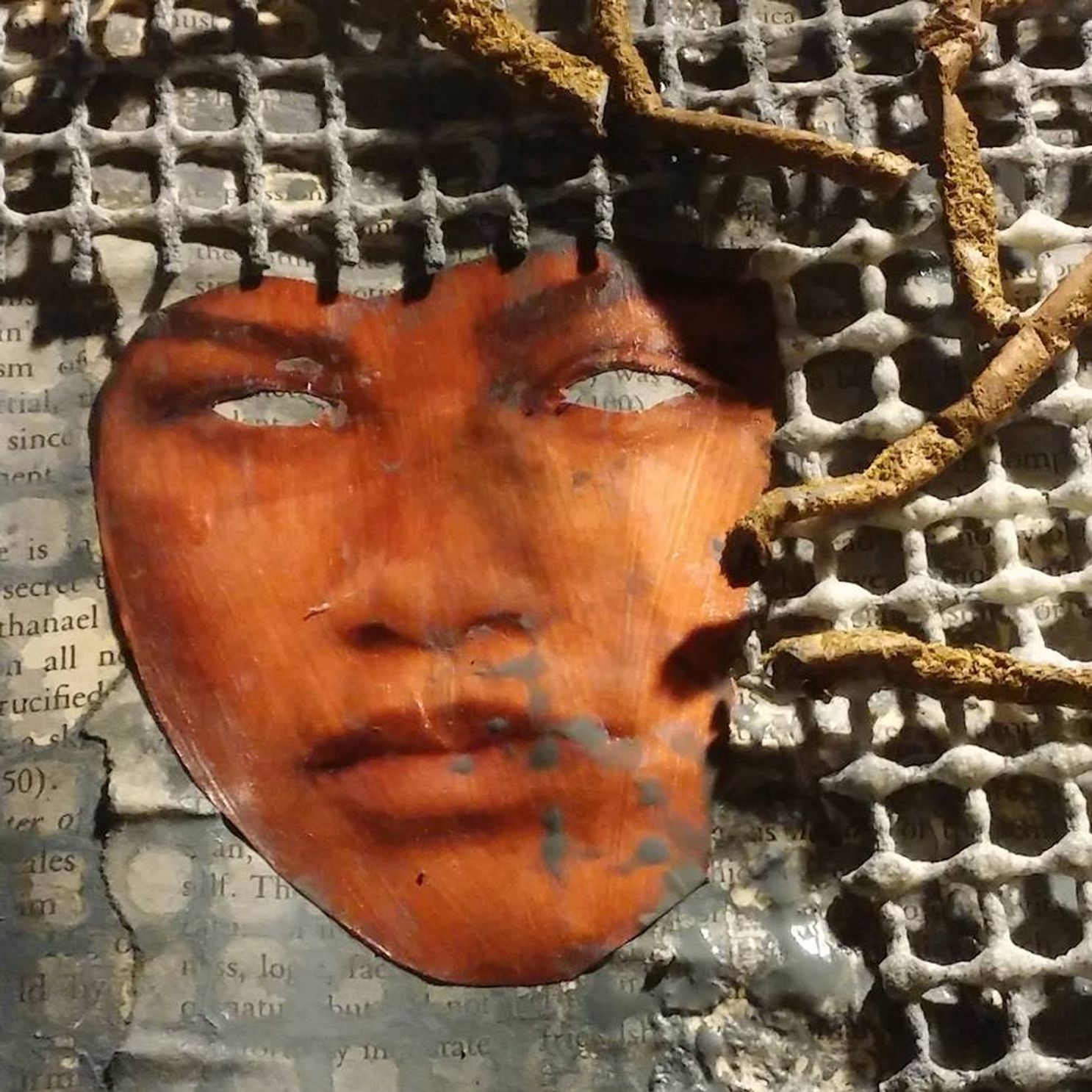
"The Unchanging Form" by darlene anita scott
2 December 2025
Dear Tami,
I saw your aunts a couple of years ago. As the distance between our girlhoods widens, myopia determines who they see when they offer their praises—a girl making her way in the world in the prescribed ways; courteous, smart, and respectable enough to be met with the world’s kindness. It’s a generous image gifted by their nearsightedness, and I turn into a little girl to receive their gushing: So sweet! and How precious! Truth is, the world has not been altogether kind, and I have not been near smart enough to outsmart its ways.
Like The Women in my family, The Women in yours probably had the same formula in mind when they were growing us. You and I were born in the same month of the same year, groomed and molded by similar forces: warm hands, church, rules, hip-hop. Had you been given the chance to grow up, you would’ve probably discovered, like I did, those forces barely compare to the ones that shapeshift Black girls like us into less generous images: Too Much, Not Enough, forever A Problem. The myth. At best we accept the awkward shapes; at worst we believe they are our natural state of being.
Summer weeks at Vacation Bible School are where I remember us most; still pliable and not yet A Problem. I no longer remember where, when, or why you stopped being embodied by those hot afternoons learning songs and eating hot dogs, just that at some point nearer our fourteenth or fifteenth year, you became That Problem. There was hissing about you being hot which meant you liked boys too much and boys liked you back as much. As far as I know there wasn’t and still isn’t a comparable term for the boys who like girls back—except, I don’t know, boys. Romantic attraction is as natural to adolescence as algebra and new body hair, but that is where the unnatural shape began to take its form. Remember how, if you dared be anything near attractive, have any assertiveness or lack of apology for it, the criticism multiplied? And since a solution needs a problem, and a myth needs both (or else there’s no plot), how we girls became The Problems in need of solutions to make the myth work. How easily we could become that myth; how easily we accepted it for ourselves and each other.
The Women couldn’t compete with the forces that shapeshift Black girls, so it sounded like they joined in the hissing. That chorus of white noise—there, but so ubiquitous it was as if it were not. Did you hear it? It took years to tune my ears. So long to read the lips of The Women. They warned how easy it is to become myth and were overwhelmed by a chorus of media, public systems, and law that kept citing us as The Problem.
After you died, whispers circulated loose as water that you had courted and even earned your death by being hot; that a demon loosened inside you, put there by one of those boys; that it spilled itself over the floor of the sanctuary like a Biblical flood washing you away in its rush. If the disease that had shadowed your bright skin from birth had caused the flood, there was no room in the plot for that part. So you became the myth that ordered how every girl who heard the hissing should tuck herself.
Understanding the origin of the myth has helped me to write this note even though I probably wouldn’t have understood it when we were teenagers. Partus sequitur ventrem was a legal doctrine passed in colonial Virginia in 1662. It means “that which is born follows the womb.” The status of Black children followed the status of their enslaved mothers, reducing Black female people to walking wombs; sexualized for profit and for pleasure that problematized our own expressions of it. When you became the embodiment of that “problem,” the rest of us folded ourselves, some more tightly than others, in conduct and costumes supposed to keep the hissing at bay, protect us from exploitation, all the while still making our expression a problem.
I absolutely unfold in the soft and supple lines of your aunts’ generous lenses; they’re pliable enough to fit a lot or a little without a problem; a wash of colors running into each other so that the image can be whatever I decide it is. You deserved the same. Not to be packaged as a cautionary myth—or any.
Thinking of you,
darlene
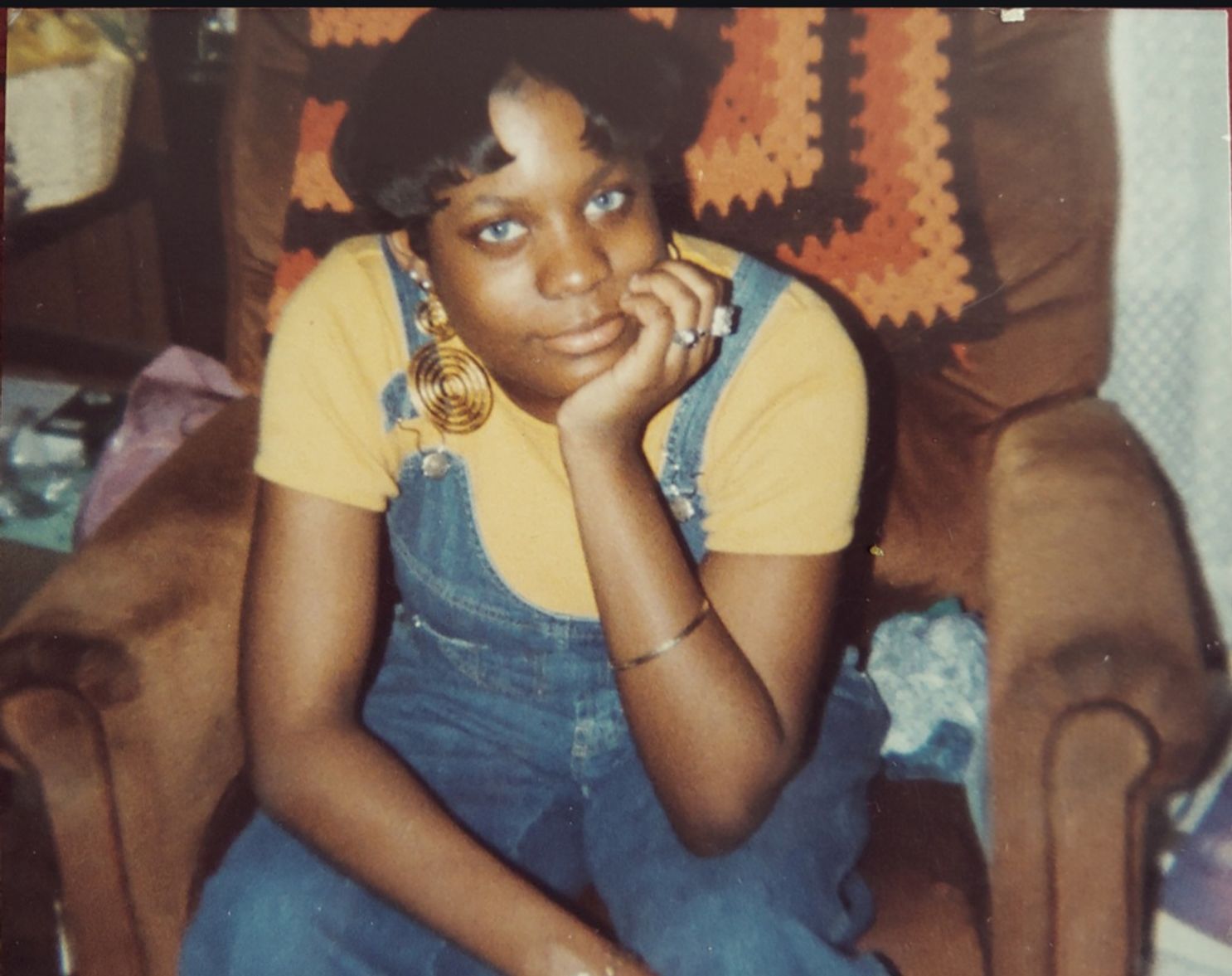
darlene anita scott as a teenager