A Poet Asks a Visual Artist: Paolo Arao
by Paolo Arao and Sarah Audsley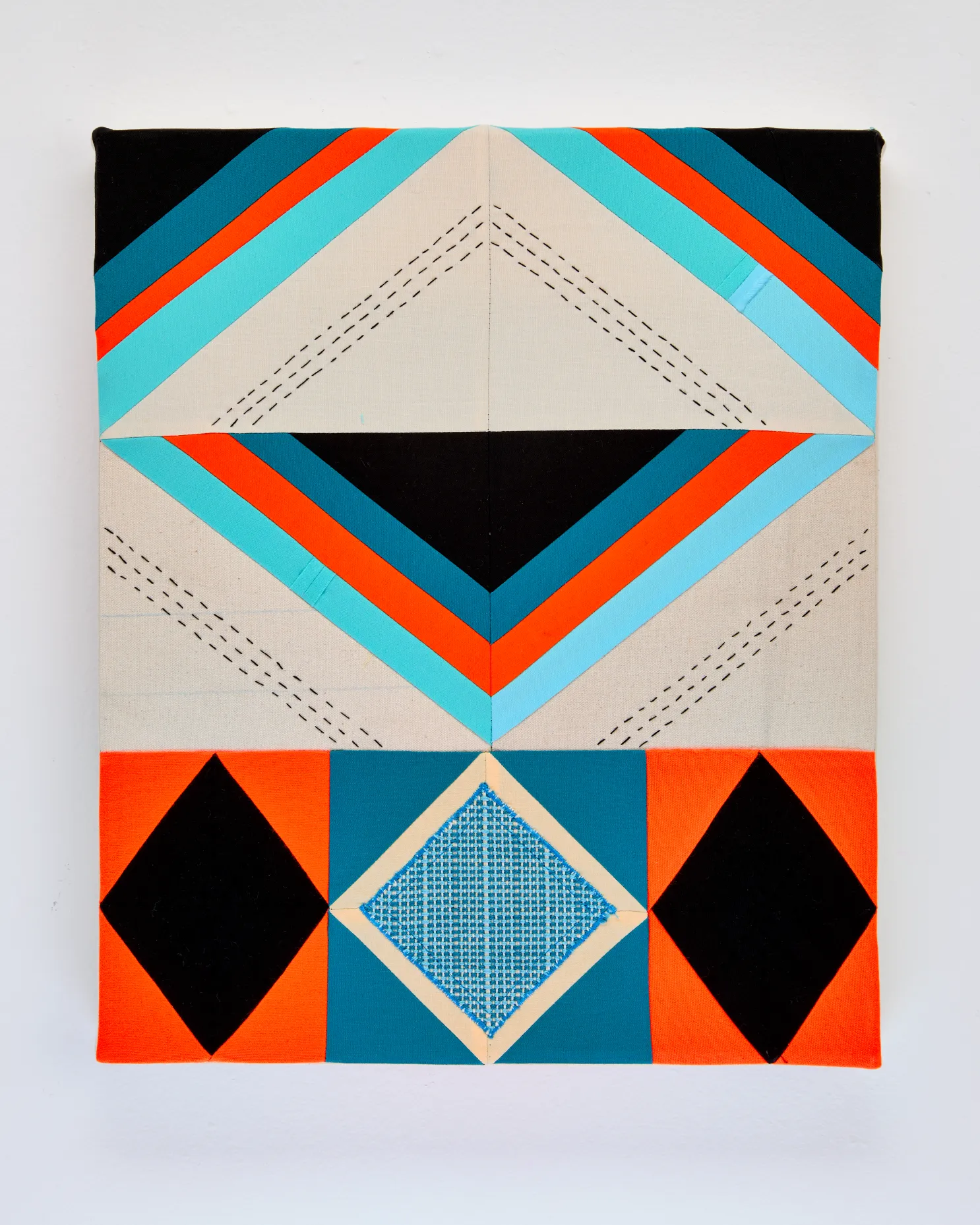
“Like Electricity,” 2024. Sewn and handwoven cotton, cotton thread, canvas. 18 x 15 inches. (Photo: Wassaic Project)
As a poet, I think about how to construct by using pattern and variation in language. Establishing a pattern allows for the moment of variation to have weight or surprise, to be where the reader pays attention. I am wondering how you think about pattern and variation in your own work. Do you know the pattern when you begin a piece? When do you add in variation in color, shape, form, or material?
Pattern and variation are integral to my work as is the notion of sameness and difference. Sometimes my patterns are invented and other times they’re inspired by patterns I’ve observed externally–in the landscape, in architecture, or textiles.
There isn’t one specific method I use to introduce variation. Mostly it depends on an internal rhythm or feeling. Variations occur through subtle and more overt shifts in color or pattern. This internal rhythm changes from piece to piece. And it emerges as a distinct moment of awareness. It’s not anything that I predict in advance.
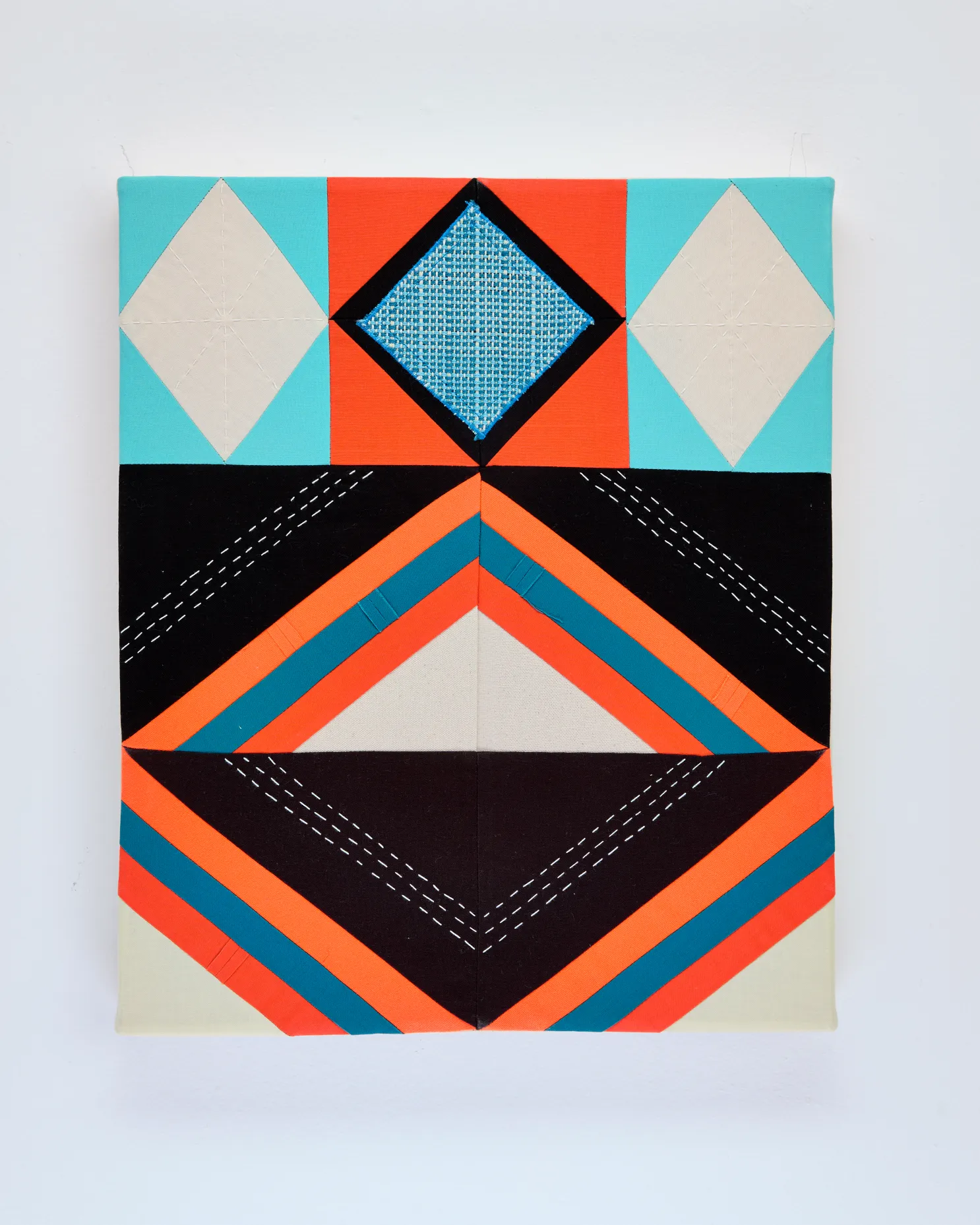
“Beacon,” 2024. Sewn and handwoven cotton, cotton thread, canvas. 18 x 15 inches. (Photo: Wassaic Project)
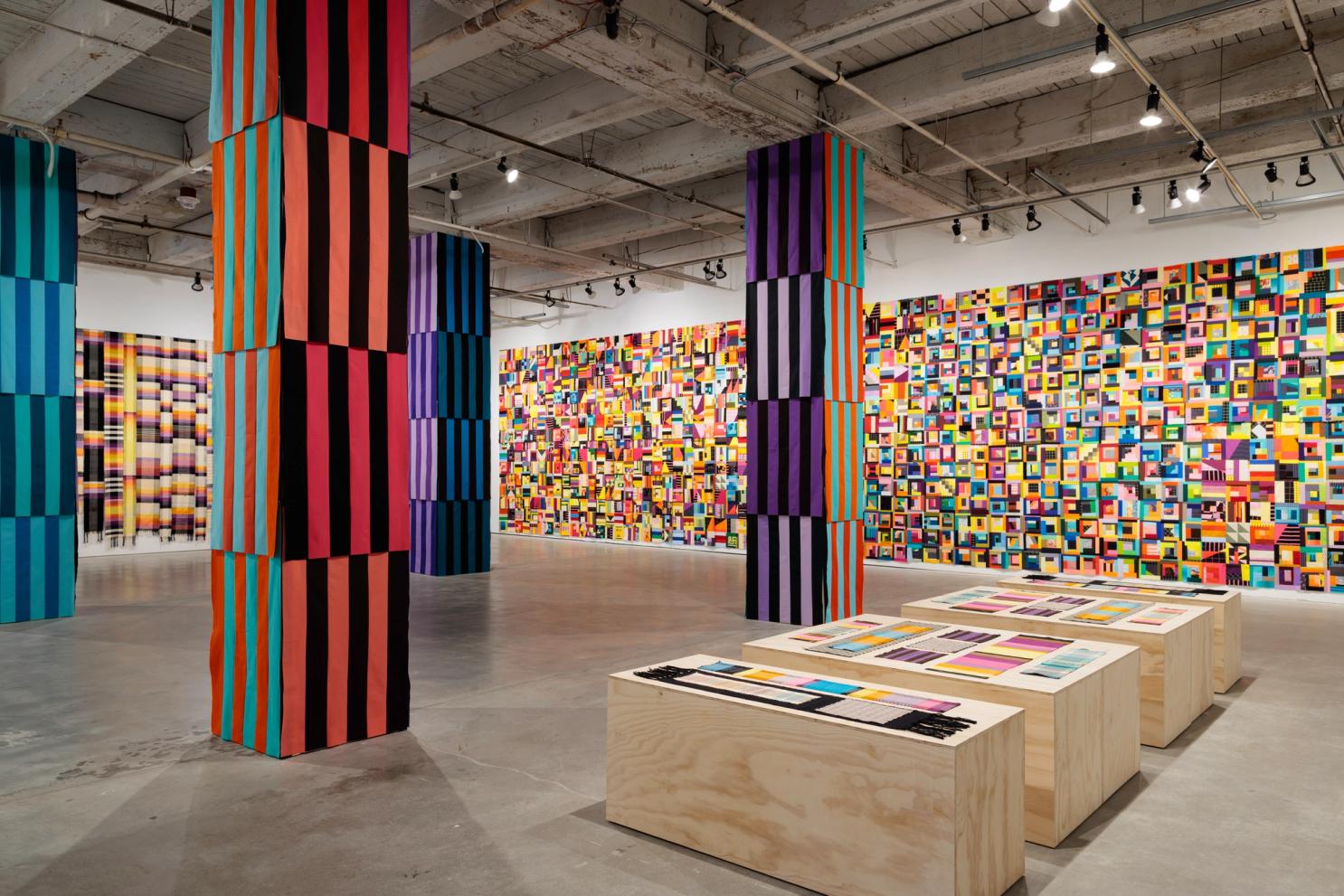
Paolo Arao: Reverberations (installation view), Bemis Center for Contemporary Arts, Omaha, NE, December 9, 2023–April 14, 2024. (Photo: Colin Conces)
I truly enjoy your vibrant color palette and how your fabric pieces are very “painterly.” From afar the viewer can be tricked into thinking that the pieces are paintings. Your use of fabric and textile in a way feels like a subversion of traditional painting techniques. How did you decide to use fabric as your central medium?
I believe that fabric chose me. I first began working seriously with textiles ten years ago after being invited to be a visiting artist in the Fibers and Materials Studies Department at the Tyler School of Art in Philadelphia. I had the game-changing opportunity to translate a painting of mine into a tapestry on their Jacquard TC2 loom. I spent a week at Tyler and produced three tapestries. I fell in love with weaving and thought about textiles in a completely different way. I gained a deeper appreciation for how cloth was made.
After my week-long visiting artist experience at Tyler, I returned to Brooklyn (where I was living at the time) and took a few sewing and weaving classes at the Textile Arts Center. Sewing was something that I immediately gravitated to because it felt like it combined color, form, and painting through textiles. It also had a tactility that resembled collage. This resonated deeply with me.
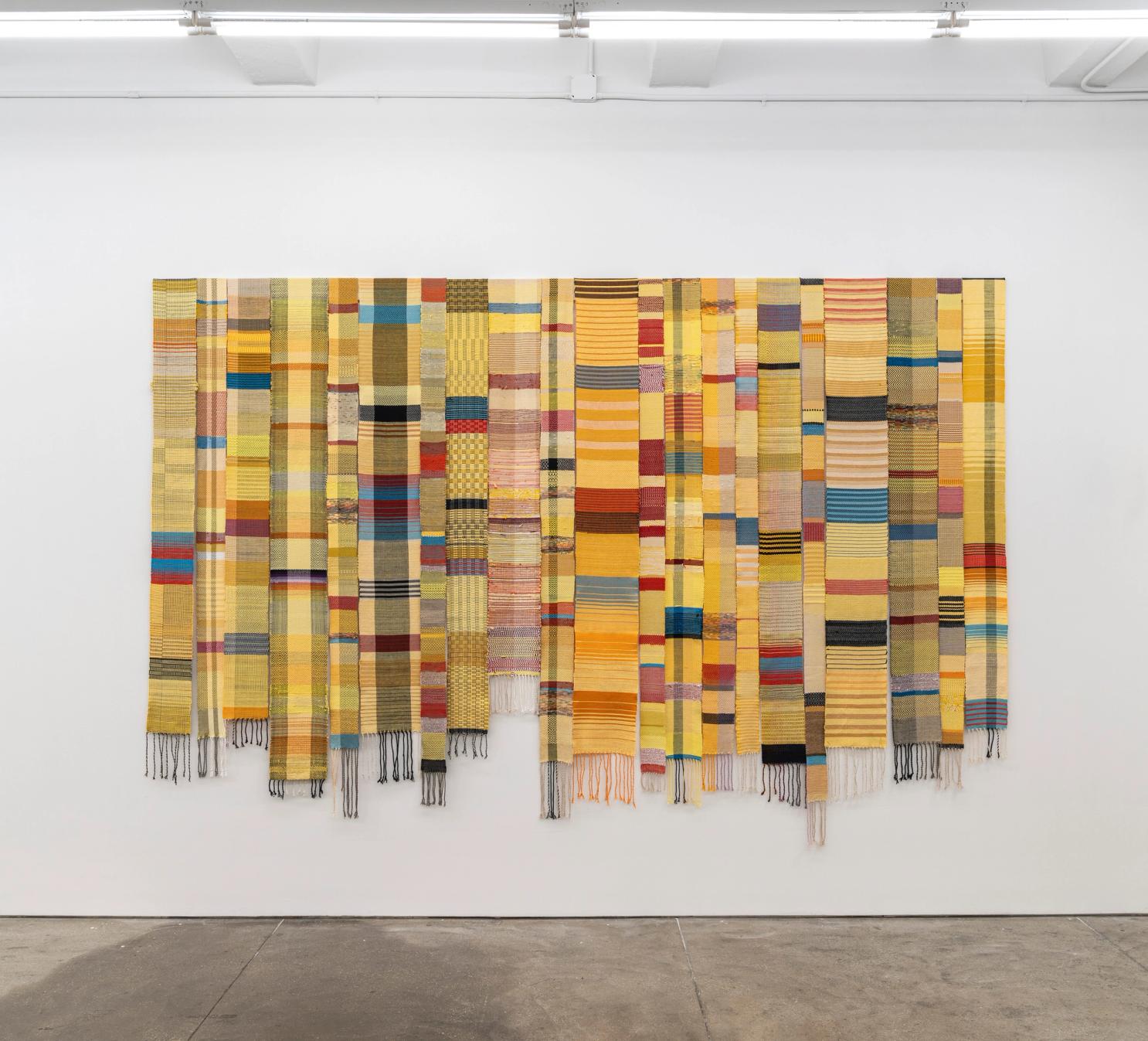
“Late Bloomer,” 2023. Handwoven cotton, wool, acrylic (21 parts total). 90 x 138.5 inches. (Photo: Cary Whittier)
I definitely see the impulse of “collage” in your work. I turned to collage when I was getting stuck with poems. I love knowing that this is part of how you conceptualize your work. Scale is also a gesture I consider. Meaning how a detail or an image can create a narrow point of view or when it can expand out with a larger lens. How do you conceptualize scale in your work? Site specific installations, of course, require thinking of scale in terms of an entire show—here I’m thinking about your solo show, Reverberations (2023).
Scale depends largely on context. My current studio is somewhat small so there are physical limitations on work that I can produce. However, if I’m making something that is site-responsive, there’s more freedom to work on a significantly larger scale. I must admit that I really enjoy seeing small paintings presented in cavernous spaces. There’s something magical about a small work having such a commanding presence.
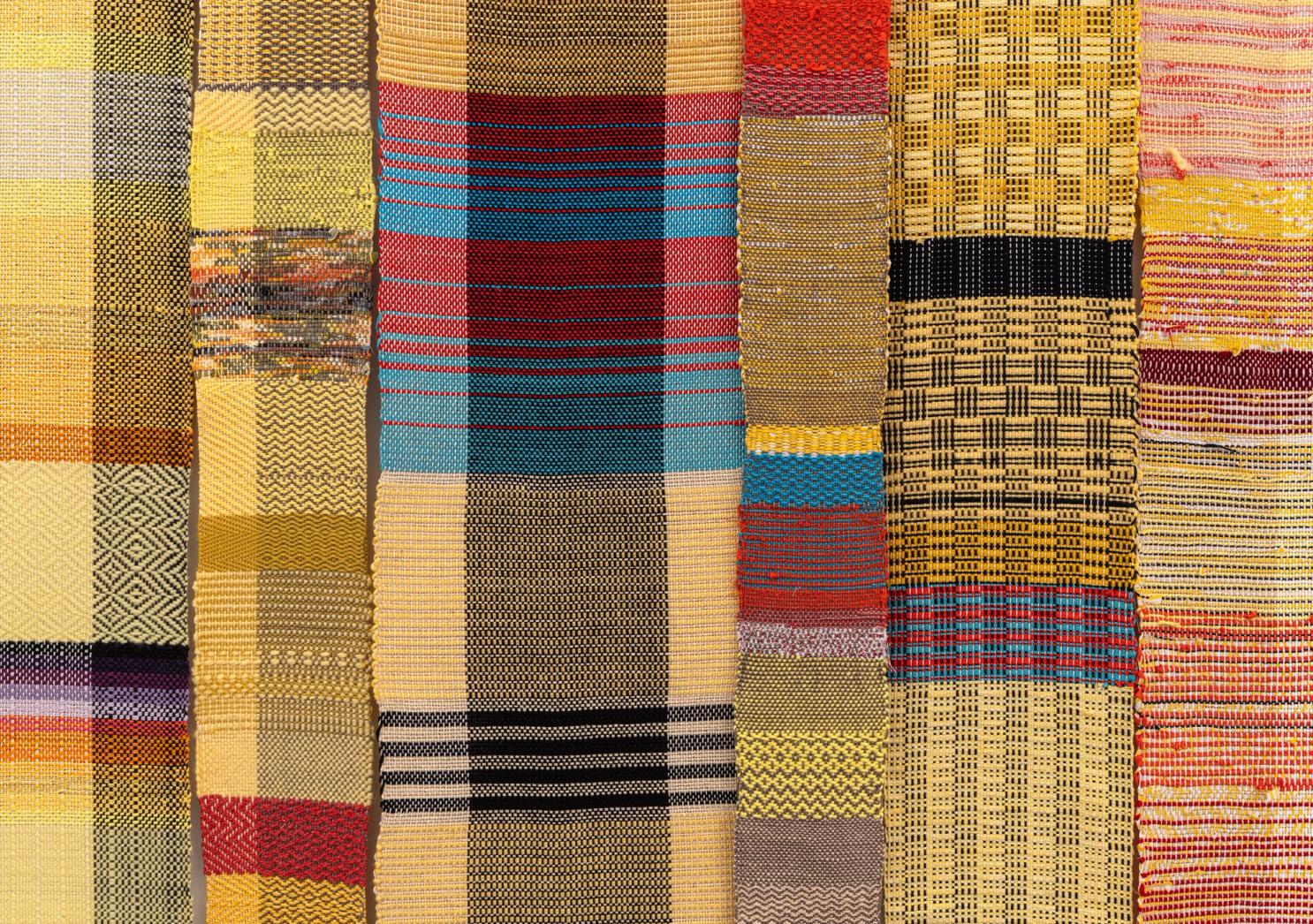
“Late Bloomer” (detail), 2023. Handwoven cotton, wool, acrylic (21 parts total). 90 x 138.5 inches. (Photo: Cary Whittier)
In the last couple of years, there has been a shift in technique in how you make your pieces. Weaving has become a central technique. Can you talk about that choice? What made you shift to weaving?
The experience I had with weaving on a Jacquard TC2 loom at Tyler was a turning point for my work. It’s where my love for textiles began. Through that experience, I became interested in textiles as a material and as a process. Sewing felt like painting to me. It was a tactile way to work with form, color, and geometry. In recent years, I’ve returned to weaving–to the original source of my interest in working with textiles.
Music was my first love. As a child, I had dreams of becoming a concert pianist and originally went to college to study music performance and composition before I developed any interest in the visual arts. Although I don’t play the piano as often as I would like, I am reminded of the piano every time I sit to weave at my loom. I love the similarities between the piano and the loom. Both devices are creative instruments that rely on the touch of the hand and movement of the body to function. There is a somatic and embodied rhythm in the process of weaving–the repetition is like breathing.
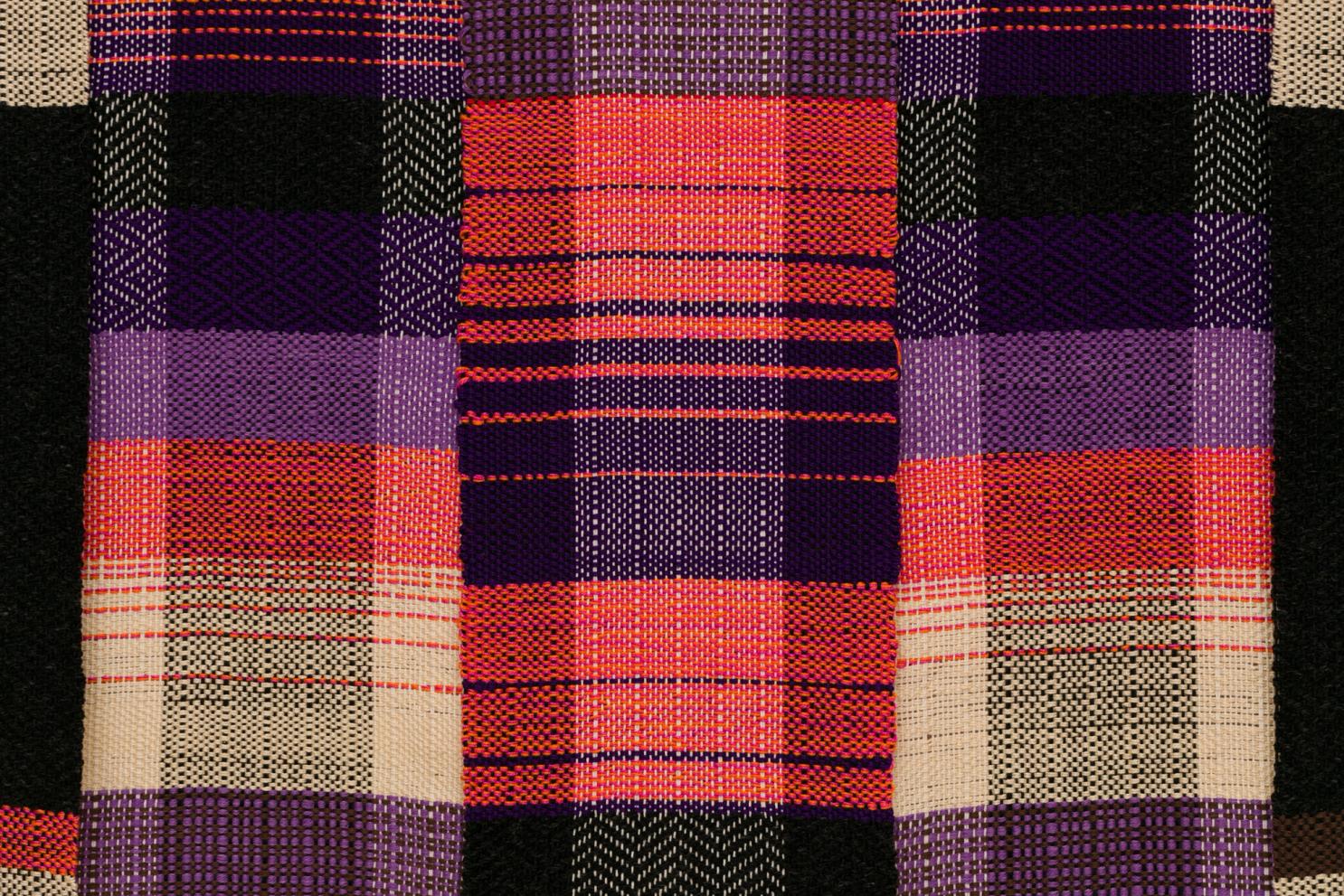
“Intervals (Nightfall),” 2024 (detail). Handwoven cotton and wool. 66 x 48 inches. (Photo: Wes Magyar)
How has this traditional craft technique been essential to new ways of self-expression and exploring your identity and cultural heritage? (In my own work, I have experimented with the sijo, a Korean poetic form, as a way to get closer to my Korean cultural heritage.)
In addition to the loom’s affinity to music, weaving is also a way for me to honor my Filipino ancestry. In traditional textiles of the Philippines, it is believed that colors and patterns are imbued with powers simultaneously spiritual, healing, and protective. I feel a strong connection to this faith in the power of color and pattern. Color is vital to my work. I carry color within me. My relationship to color is personal, it is emotional, it is felt, and it is in every fiber of my being.
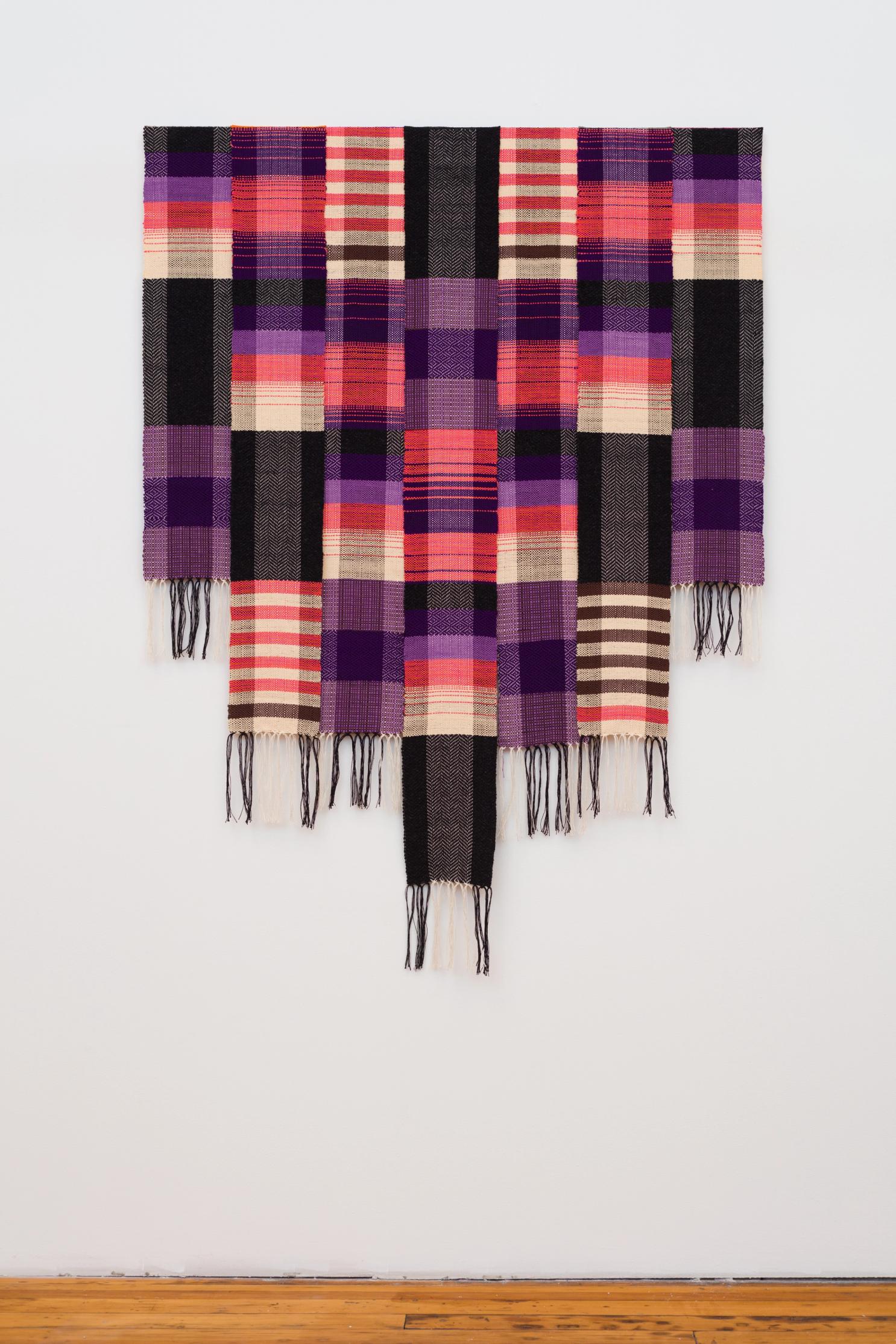
“Intervals (Nightfall),” 2024. Handwoven cotton and wool. 66 x 48 inches. (Photo: Wes Magyar)
I could pick out a “Paolo Arao” piece in a lineup of pieces. To me, it seems like you have developed a signature style and a visual language that is distinctive and unique. For example, some poets are “known for” certain types of poems or themes or subject matter in their work. Does that become a box or a crutch? Or just how one’s signature gesture with their work?
It's interesting that you mention a signature style / visual language. For me, this is something that feels like it’s continually evolving…
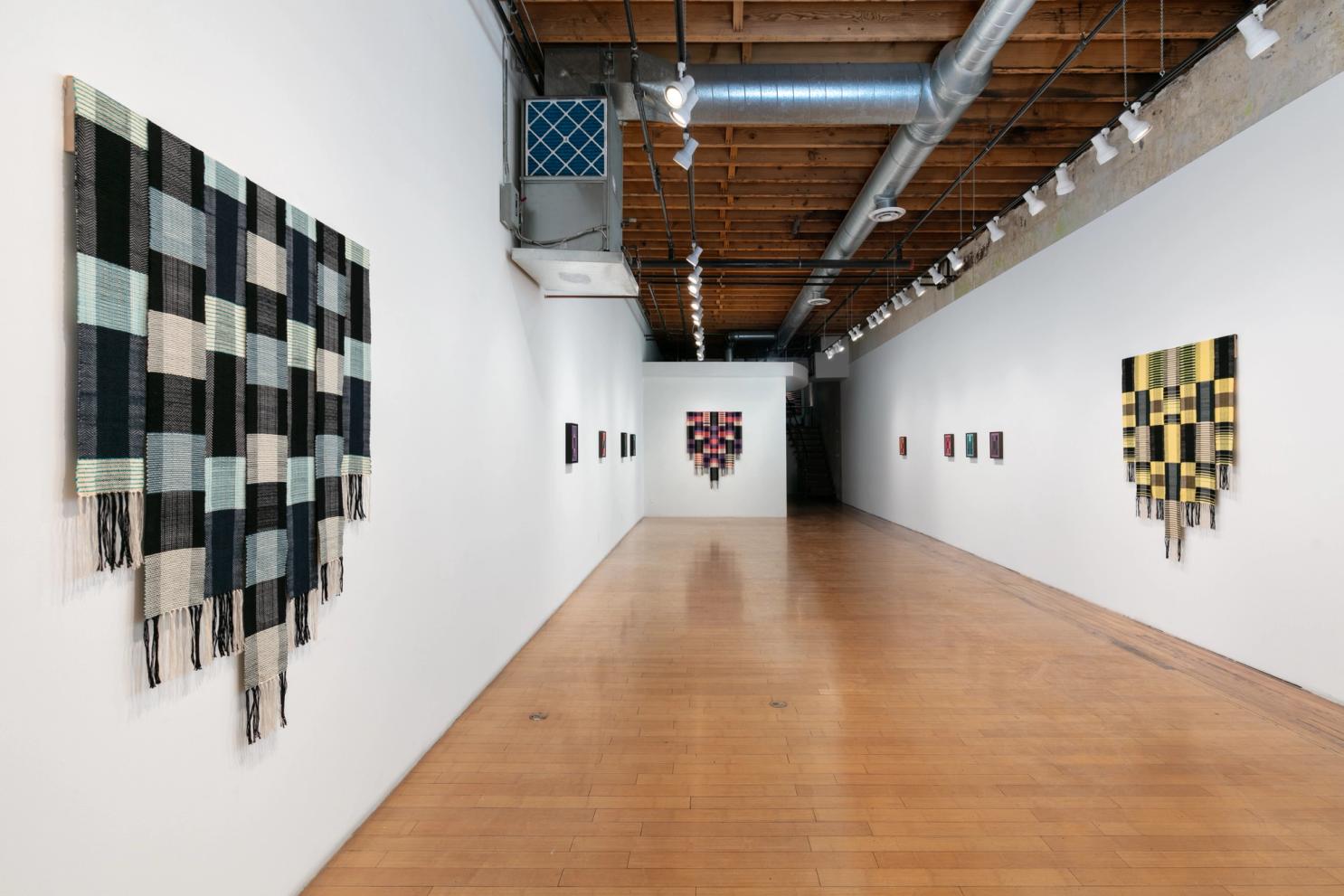
Paolo Arao: Devotion (installation view), David B. Smith Gallery, Denver, CO, April 13–May 11, 2024. (Photo: Wes Magyar)
With that being said, when or how does experimentation or exploring new ideas come into play in your process?
I have a daily sketchbook practice which allows me a space for experimentation and exploring new ideas. It’s important for me to have a space where I can visualize thoughts and ideas without judgment or self-criticism. It’s a space where I can work without pressure or anxiety. It allows me to explore my curiosity. My sketchbook is a place for planting seeds. Some ideas need more time to grow and cultivate.
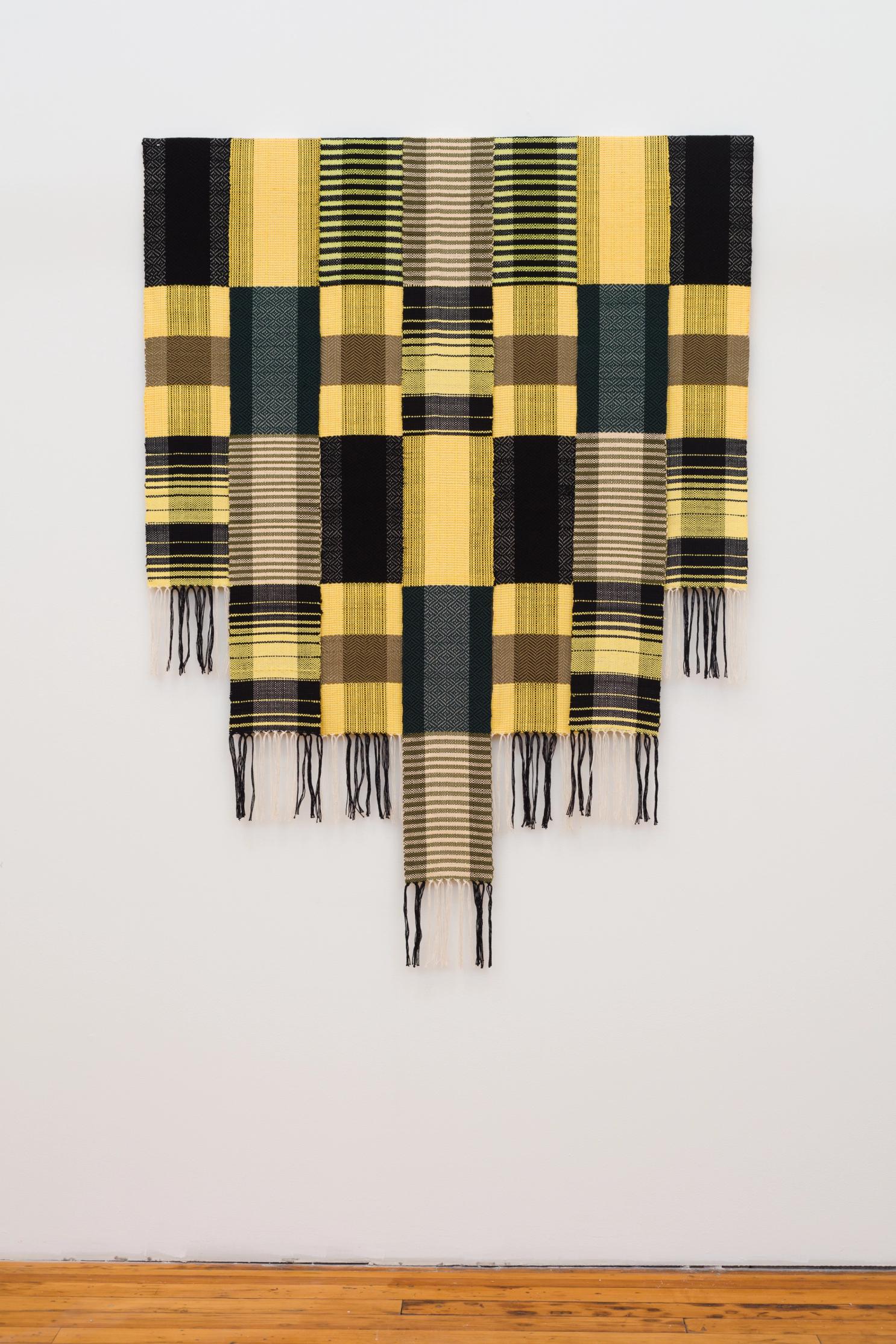
“Intervals (Forest),” 2022. Handwoven cotton and acrylic. 66 x 48 inches. (Photo: Wes Magyar)
Related

A Poet Asks an Interdisciplinary Visual Artist: Kristen Mills