Pause, Linger, Imagine: Comics as Time and Space
by Robert James RussellWhat you need to know is that comics is a medium of omission. It’s visual, but with no moving images, only the illusion of motion from panel to panel, page to page. It’s the tension between what’s shown and what’s left out that makes this form utterly unique.
When I first transitioned to comics from fiction and long-winding essays, my instinct was to add everything to the pot. But comics aren’t traditional essays—it’s the interplay of text and image that does the narrative lifting. So a three-thousand-word comic script may need to shrink to three hundred words (or less), leaving space for the images to speak.
And yet, comicsmakers are directors with almost infinite possibilities. Every panel is like a shot in a film: Are we showing characters up close, far away, isolated at home, in a crowd? What do we want the last panel of a page to do before the reader turns to the next?
Renowned illustrator and comics theorist Scott McCloud refers to diegetic space as the world of the story itself, the space where characters live, move, and act, both inside each panel and in the invisible moments between them that the reader imagines. Controlling and restricting movement, guiding the reader to linger, is one of our most powerful tools.
When I teach comics-making classes, I almost always show the version of the following comic I made as an example of what I mean.
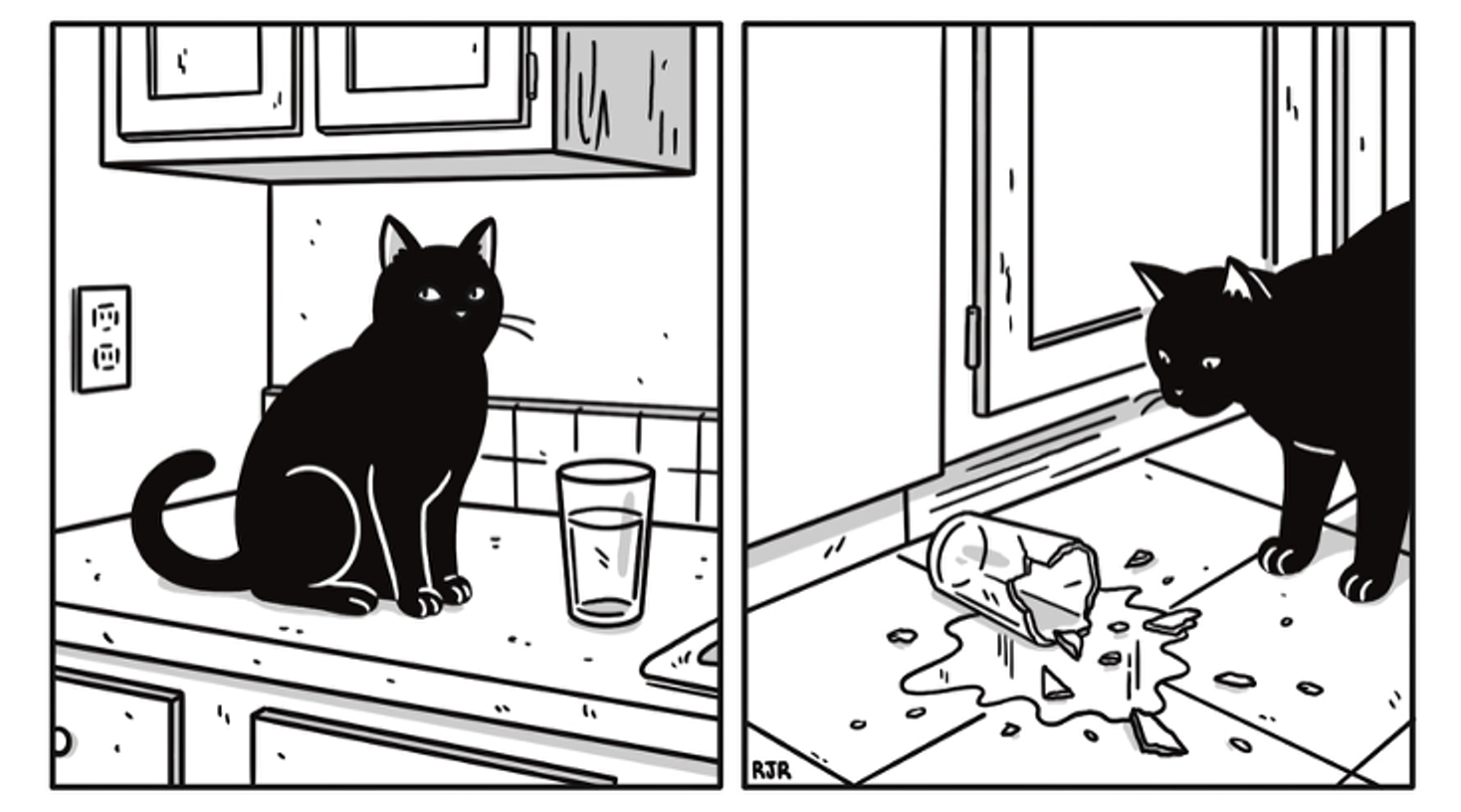
In the first panel, a black cat sits on a counter beside a glass of water. In the second, the glass lies shattered on the ground. Comics thrive on this kind of omission: We never see the moment in between. By choosing what to show and what to leave out, I control the pace and how much you, the reader, must infer. Did the cat push the glass over, now inspecting its work? Did something else topple it, leaving the cat confused? Both possibilities exist within the comic’s diegetic space and that ambiguity, the quiet moment where the reader fills in what happened, is where comics truly come alive.
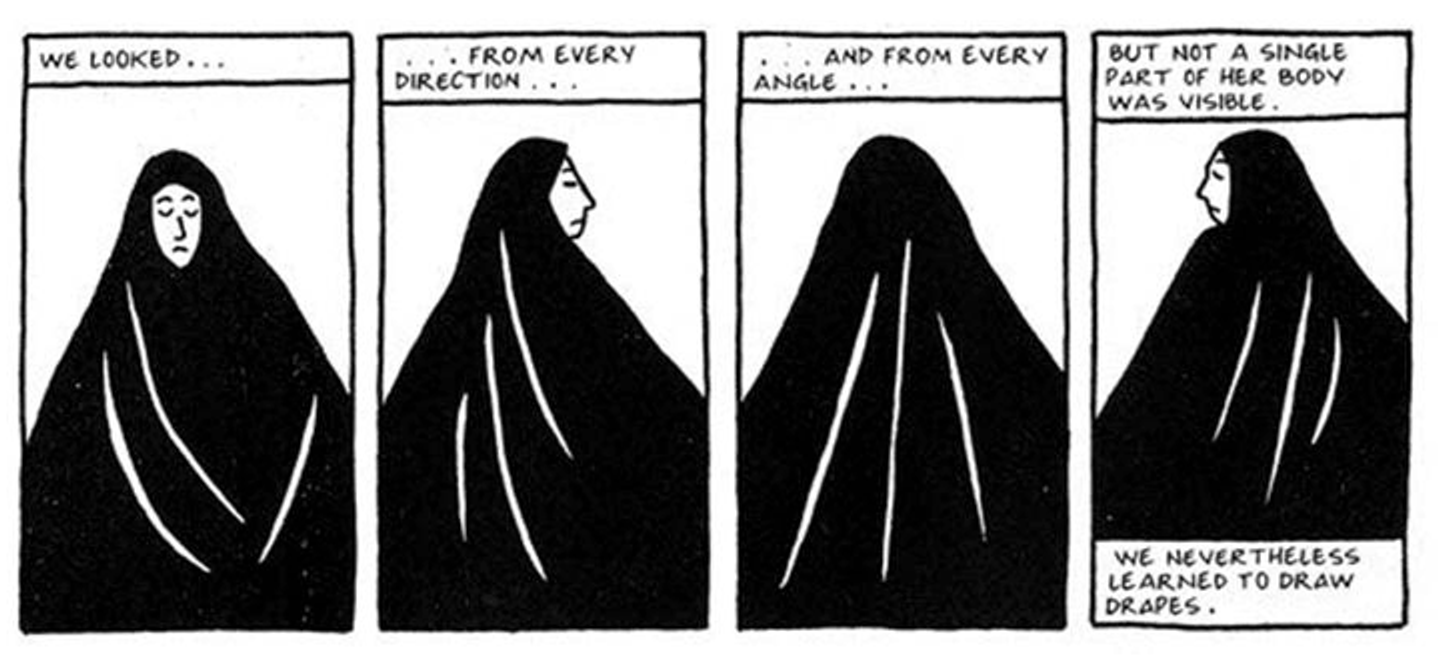
In Marjane Satrapi’s seminal graphic memoir Persepolis, movement can be subtle: a four-panel sequence showing a woman turning her head in different directions asks the reader to dwell, to reflect, and to infer action and emotion. Very little “happens” panel to panel in this example, and yet the pacing of the panels invites us to consider the moment and feel the larger world young Satrapi was living through.
In AJ Dungo’s In Waves, the panels can be even more restrained. A sequence might show only a few quiet images: oxygen tubes, Kristen sitting in a wheelchair with a pier behind her, and then a distant view of surfers on the ocean. Very little “action” occurs between these panels, yet the reader is asked to do a great deal of work. We identify the space—the beach. We bring our own understanding and sensory experiences of that place. We imagine the shifts in perspective and distance between the panels, the physical movement required to move from one moment to the next.
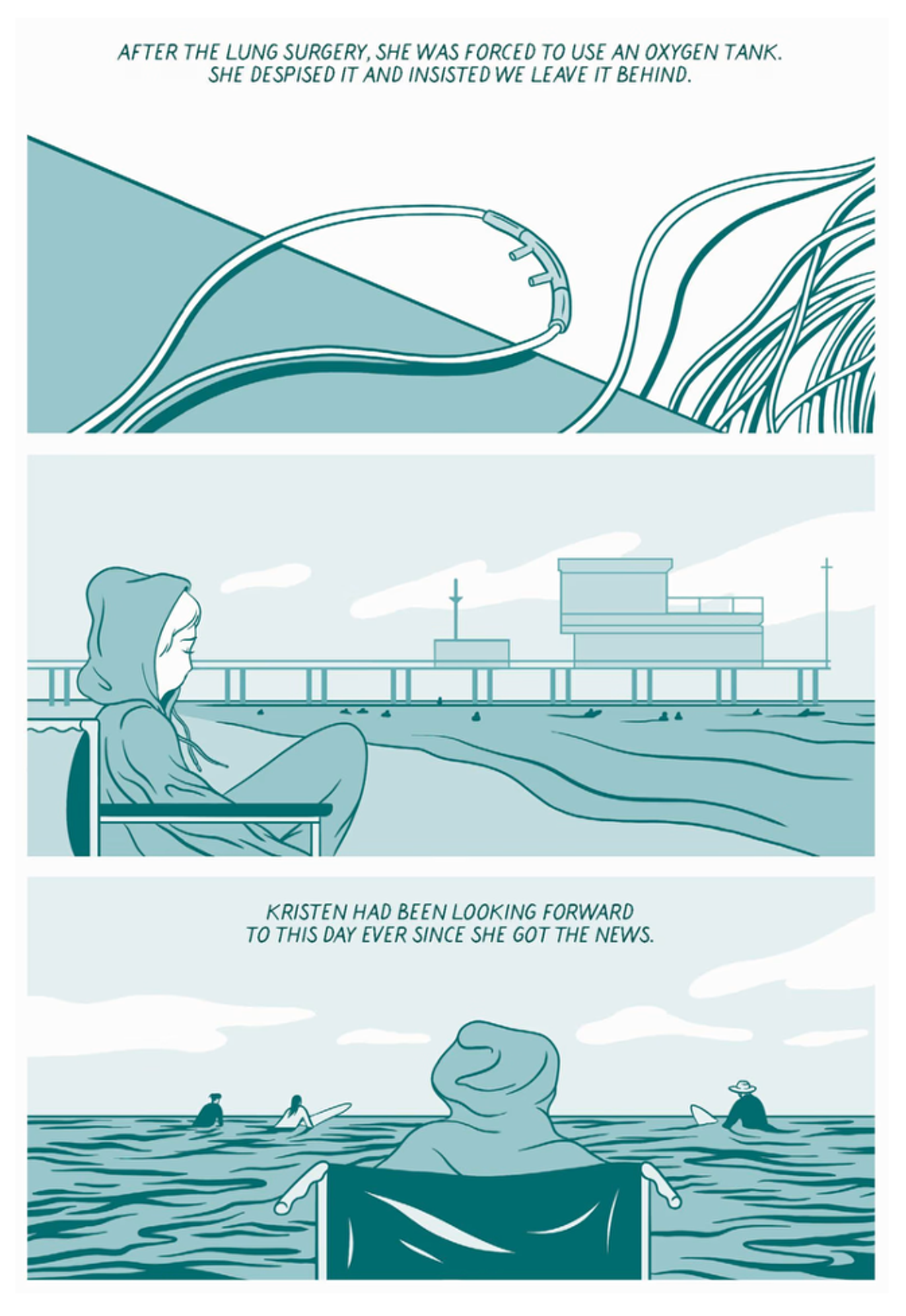
The power here lies in what isn’t drawn. By choosing these specific images—these angles, these locations—the comicsmaker guides us through a scene without needing to show every step along the way. Layout becomes a way of measuring time and guiding the reader through a scene.
As Shenandoah’s first comics editorial fellow, I sought works that played with space, omission, and movement to create stories that could exist only in this medium. I was astounded by the sheer number of submissions. Comics have often been siloed or separated in literary spaces, yet these works deserve recognition alongside prose, poetry, and nonfiction. Whether it’s Joe Sacco’s comics journalism, Alan Moore’s Watchmen, or Art Spiegelman’s Maus, the medium proves again and again that comics are capable of literary depth, historical reflection, and emotional resonance.
The works in this issue are powerful, refreshing, and deeply emotional. They show us space in ways that challenge our perception and encourage us to reassess how stories unfold. I’m thrilled to present these five comics, and I’m grateful to every creator who submitted. Their courage, experimentation, and mastery of this medium demonstrate why comics embody storytelling in one of its most expressive and vital forms.
—Robert James Russell, March 2026

Related

Flower Memory
Birds in the Dark